

Istanbul travel guide
Practical basics for a first visit, each taken from an official page we fetched on 27 November 2026. Where an official page would not load, we left the fact out.
Entry rules and the e-Visa
The Ministry of Foreign Affairs says you apply for the e-Visa online at evisa.gov.tr, and that it is "only valid when the purpose of travel is tourism or commerce". Work and study visas come from Turkish embassies or consulates. Whether you need a visa depends on your nationality and passport type: many countries get visa-free entry for up to 90 days within a 180-day period, and some nationalities can enter with a national ID card instead of a passport (Ministry of Foreign Affairs, visa information for foreigners).
On passports, the ministry recommends at least 6 months of validity from your arrival date. Since 1 January 2015 the passport must also stay valid for 60 days beyond your authorised stay, so a 30-day stay needs 90 days of validity. The same page says anyone residing, working or studying in Turkey must register with the local police on arrival, and that filming a documentary, doing research or archaeological excavation needs special permission in advance. The ministry's page is marked 2022, so check your own country on the official list before you book.
Currency
The Central Bank of the Republic of Turkey describes the banknotes in circulation as Turkish lira banknotes (Central Bank, banknotes in circulation). We give no exchange rates on this page.
Getting around: Istanbulkart and public transport
Istanbul's public transport operator IETT lists tunnel, nostalgic tram, bus and Metrobus services on its site, with visitor transport guides for airports, bus terminals, piers, railway stations and the islands, a route and station search and a 153 customer solutions centre (IETT). Its passenger rights notice says passengers must use an Istanbulkart during trips and show it to staff when asked (IETT passenger rights notice).
Official pages on where to buy the card and current fares did not load for us on 27 November 2026, so we do not state sales points or prices here. For ferry trips see Bosphorus cruises.
Climate by month
Monthly means for Istanbul from the Turkish State Meteorological Service, measurement period 1950 to 2025 (MGM, Istanbul statistics).
| Month | Mean max (°C) | Mean min (°C) | Mean rainy days |
|---|---|---|---|
| January | 9.6 | 4.2 | 16.27 |
| February | 10.2 | 4.2 | 13.92 |
| March | 12.4 | 5.5 | 12.58 |
| April | 17.4 | 9.2 | 10.08 |
| May | 22.3 | 13.6 | 7.52 |
| June | 27.1 | 18.0 | 5.37 |
| July | 29.7 | 20.5 | 3.48 |
| August | 29.7 | 20.8 | 3.59 |
| September | 25.9 | 17.6 | 5.53 |
| October | 20.6 | 13.7 | 9.48 |
| November | 16.1 | 9.9 | 11.26 |
| December | 11.8 | 6.5 | 15.53 |
July and August are the warmest months, with a mean maximum of 29.7 °C. January has the most rainy days (16.27) and the lowest mean minimum with February (4.2 °C).
Main sights and areas, as the official tourism page lists them
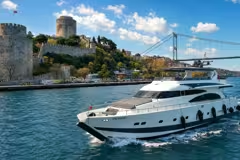
The Istanbul Provincial Directorate of Culture and Tourism lists these sights: Hagia Sophia Grand Mosque, Topkapi Palace, Dolmabahce Palace, Maiden's Tower, Rumeli Fortress, Ortakoy Mosque, the Bosphorus, the Golden Horn, the Princes' Islands, the Bozdogan Aqueduct, Balat and the July 15th Martyrs' Bridge (Istanbul Provincial Directorate of Culture and Tourism).
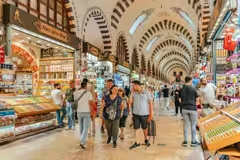
The same page describes districts by what they are known for: Fatih (Eminonu, the Spice Market and the Grand Bazaar), Beyoglu (Cihangir, Galip Dede Street and Istiklal Street), Besiktas (Ortakoy), Eyupsultan, Sisli (Nisantasi) and Beykoz (glass art).
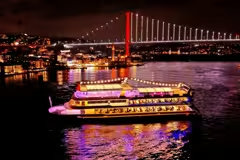
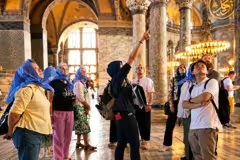
Our guides: Hagia Sophia tours, Bosphorus cruises, Turkish baths and food tours.
Where to stay: our area figures
From our own where to stay in Istanbul page: Booking.com groups the hotels in our guides by area, and the prices are per night for 2 adults on 12 to 14 January 2027 as shown on 27 November 2026.
| Area on Booking.com | Hotels in our guides | Per night |
|---|---|---|
| Old City Sultanahmet | 22 | EUR 40 to 260 |
| Taksim | 6 | EUR 52 to 266 |
| Sirkeci | 6 | EUR 55 to 127 |
| Asian Side | 2 | EUR 72 to 88 |
More: hotels in Sultanahmet and best hotels in Istanbul.
Emergencies
The single emergency number is 112. Calls that used to go to separate police, gendarmerie, fire, ambulance, forest and AFAD numbers are combined under it, and foreign-language callers can be served with interpreter support (Ministry of Health, new-generation 112 call centre).
Numbers behind the visits
For official visitor figures see Istanbul tourism statistics.
Frequently asked questions
Do I need a visa for Istanbul?
It depends on your nationality and passport type. The Ministry of Foreign Affairs says many countries get visa-free entry for up to 90 days in a 180-day period, and the e-Visa is valid only for tourism or commerce.
How long must my passport be valid?
The ministry recommends at least 6 months from arrival, and the passport must stay valid for 60 days beyond your authorised stay.
What currency is used in Turkey?
The Central Bank of the Republic of Turkey issues Turkish lira banknotes.
What is the emergency number?
112, the single emergency number for ambulance, fire, police, gendarmerie and other services, with interpreter support for foreign-language callers.
What is the weather like in Istanbul in January and July?
MGM's 1950 to 2025 means: January 9.6 °C maximum, 4.2 °C minimum and 16.27 rainy days; July 29.7 °C maximum, 20.5 °C minimum and 3.48 rainy days.
Sources
- Ministry of Foreign Affairs, visa information for foreigners (retrieved 2026-11-27)
- Central Bank, banknotes in circulation (retrieved 2026-11-27)
- IETT, Istanbul public transport (retrieved 2026-11-27)
- IETT passenger rights notice (retrieved 2026-11-27)
- MGM, Istanbul climate statistics (retrieved 2026-11-27)
- Istanbul Provincial Directorate of Culture and Tourism (retrieved 2026-11-27)
- Ministry of Health, new-generation 112 call centre (retrieved 2026-11-27)